Introduction
Sending emails from an application — whether it's a welcome message, password reset, order confirmation, or notification — is one of the most common features developers need to build. Rather than configuring a traditional mail server, most developers today use an email API, which handles delivery, formatting, and inbox reliability through a simple integration. Fortunately, several providers offer generous free tiers that are more than enough for small projects, startups, and even early-stage production apps. This post covers the common challenges developers face when choosing an email API, and breaks down the best free options available today.
The Problem
Developers looking to add email functionality to their apps often run into a few common challenges:
- Deliverability issues: Emails sent through a simple SMTP setup or unverified sender can easily land in spam folders, undermining the reliability of important transactional messages.
- Confusing setup process: Some email APIs require complex domain verification, DNS record configuration, or unclear documentation, making the initial setup harder than it needs to be.
- Unclear free-tier limits: Free plans vary significantly in daily or monthly sending limits, and it's not always obvious which provider offers the best fit for a specific project's expected volume.
- Missing developer-friendly features: Some providers focus heavily on marketing email tools, making it harder to find simple, developer-focused transactional email APIs with clean documentation.
- Template and design limitations: Building well-formatted HTML emails from scratch can be time-consuming, and not all free-tier plans include helpful features like templates or a visual email editor.
- Poor visibility into delivery status: Without proper logging or webhook support, developers can struggle to track whether emails were actually delivered, opened, or bounced.
Without the right email API, developers risk unreliable delivery, wasted development time, or an overly complex integration process for what should be a simple task.
The Solution
Several email API providers offer strong free tiers well-suited for developers building transactional email into their apps:
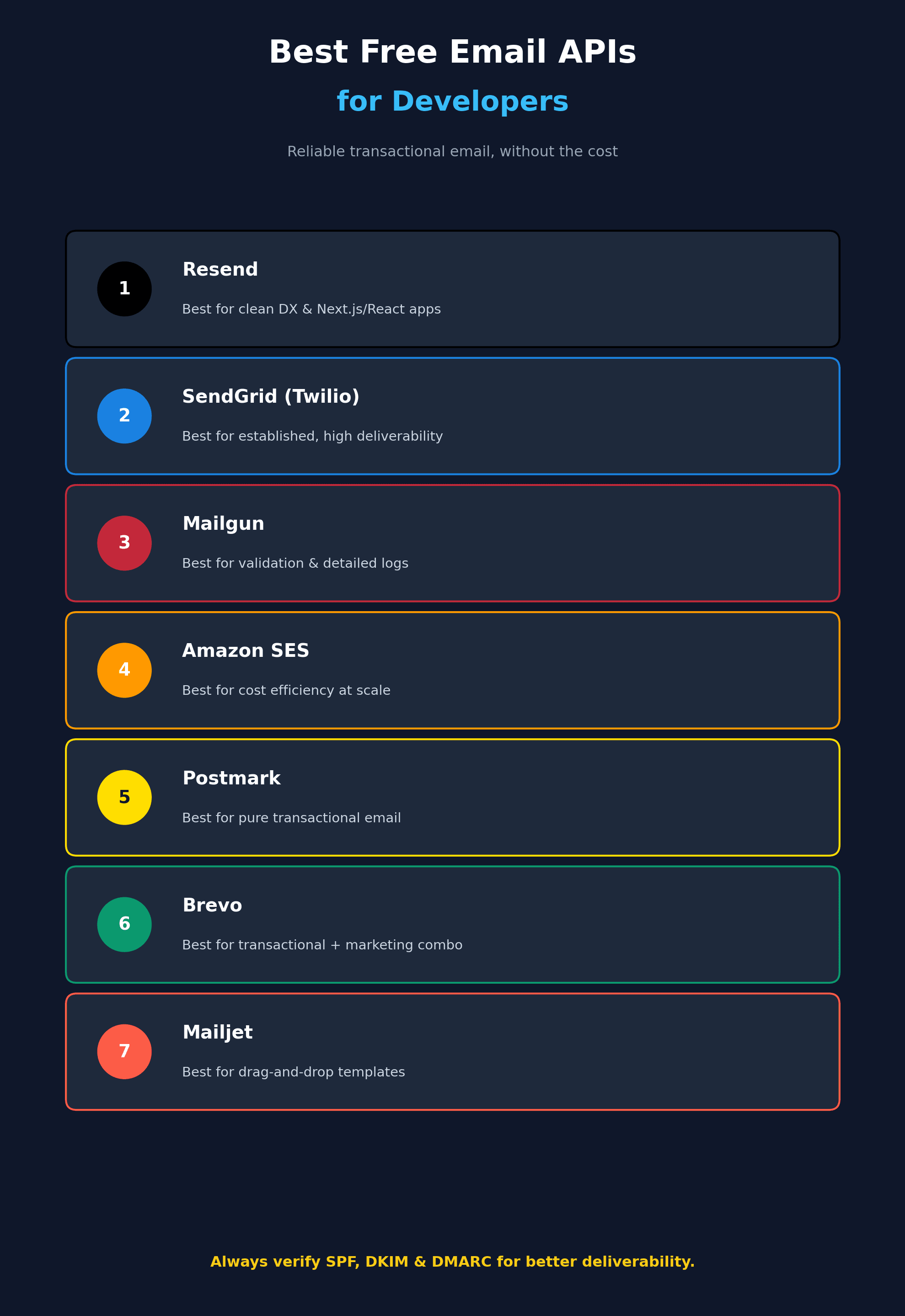
- Resend: A modern, developer-focused email API built with simplicity in mind, Resend offers a generous free tier, clean documentation, and first-class support for popular frameworks like Next.js and React, making it a favorite for new projects.
- SendGrid (Twilio SendGrid): One of the most established email API providers, SendGrid offers a free tier with a daily sending limit, strong deliverability, detailed analytics, and support for both transactional and marketing emails.
- Mailgun: Popular among developers for its straightforward API and solid deliverability, Mailgun offers a free trial and competitive pricing afterward, with strong support for email validation and detailed logs.
- Amazon SES (Simple Email Service): AWS's email service offers an extremely low-cost pay-as-you-go model, and if your app is hosted on AWS, sending from an EC2 instance can come with additional free-tier allowances, making it a cost-effective choice at scale.
- Postmark: Known for its focus purely on transactional email (not marketing), Postmark offers fast, reliable delivery with a free trial, detailed analytics, and templates designed specifically for things like receipts, password resets, and notifications.
- Brevo (formerly Sendinblue): Brevo offers a free tier with a daily sending limit that covers both transactional and marketing emails, along with built-in templates and automation features, making it a flexible all-in-one option.
- Mailjet: Offers a free monthly sending allowance along with a drag-and-drop template builder, useful for developers who also want an easy way to design well-formatted emails without much manual HTML work.
- Choosing based on your use case: For simple transactional emails with clean developer experience, Resend or Postmark are strong choices. For higher volume or AWS-based infrastructure, Amazon SES offers the best cost efficiency. For projects needing both transactional and marketing email in one platform, Brevo or SendGrid may be a better fit.
- Domain verification for better deliverability: Regardless of provider, verifying your sending domain with proper SPF, DKIM, and DMARC records significantly improves the chances of your emails reaching the inbox instead of spam.
- Monitoring delivery with webhooks: Most of these providers offer webhook support to track email events like delivery, opens, clicks, and bounces, which is valuable for debugging issues and understanding user engagement.
By choosing the right free email API for your specific use case, you can add reliable email functionality to your application without unnecessary complexity or upfront cost.
Conclusion
Free email APIs have made it easy for developers to add reliable transactional email to their applications without managing their own mail servers or dealing with poor deliverability. Whether it's Resend for a clean developer experience, SendGrid or Brevo for broader feature sets, or Amazon SES for cost efficiency at scale, there's a strong free option to fit almost any project's needs. Taking the time to properly verify your sending domain will also go a long way in ensuring your emails actually reach your users' inboxes.