Introduction
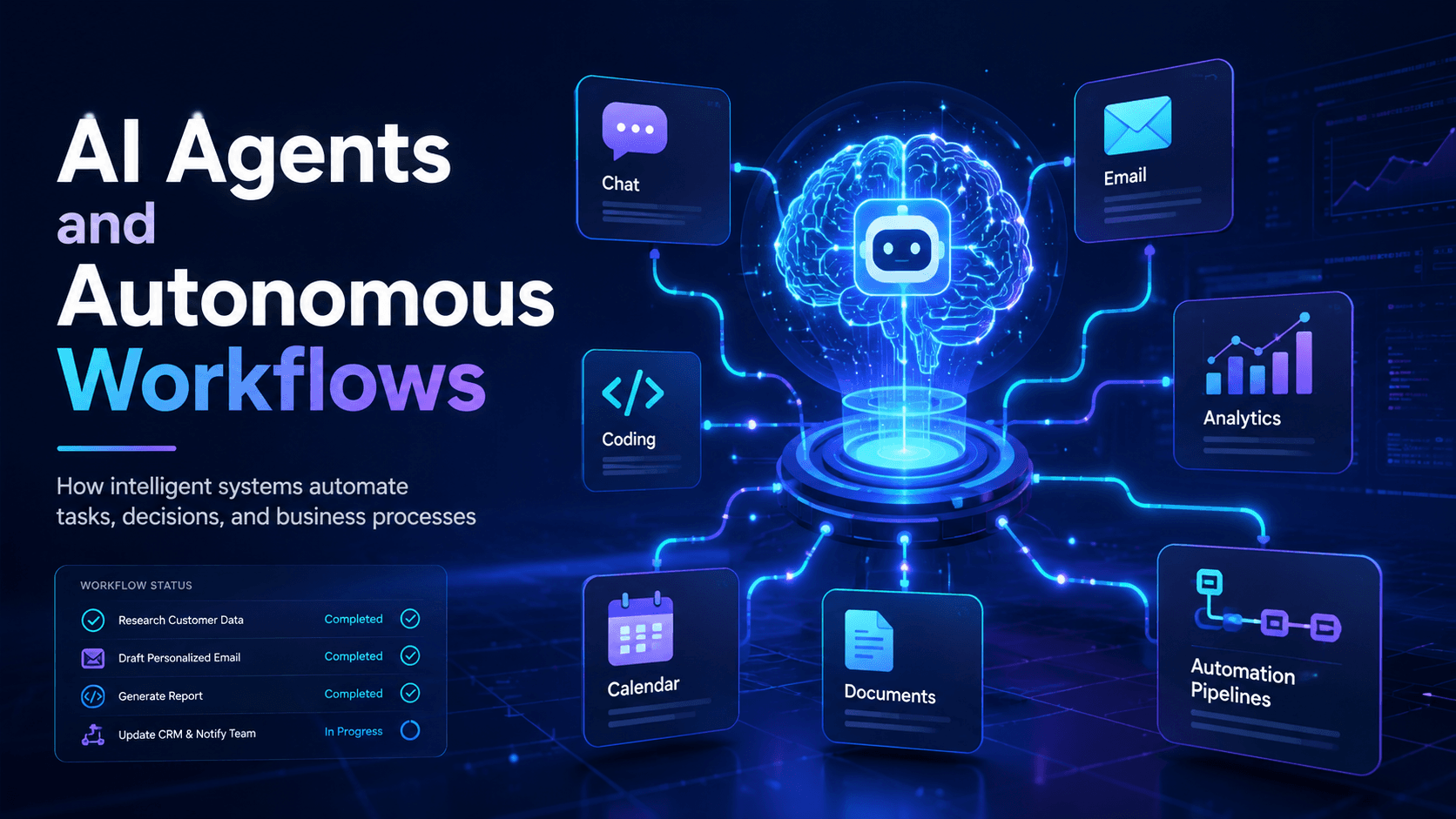
AI agents have quickly become one of the most talked-about trends in technology, moving beyond simple chatbots into systems that can plan, use tools, and complete multi-step tasks with minimal human input. Unlike a traditional chatbot that just answers a question, an AI agent can browse the web, call APIs, write and run code, update a spreadsheet, or coordinate several of these actions together to accomplish a larger goal. Autonomous workflows take this a step further, chaining multiple agents or steps together to handle an entire process from start to finish. This post breaks down what's driving interest in this space, and how AI agents and autonomous workflows are actually being used today.
The Problem
Before AI agents became practical, businesses and developers faced a consistent set of limitations:
- Chatbots could only talk, not act: Traditional AI chat interfaces could answer questions and generate text, but couldn't actually take action, like updating a database, sending an email, or completing a multi-step task on their own.
- Manual multi-step processes: Many business workflows involve multiple steps across different tools, like researching a topic, drafting content, checking it against data, and then publishing it, all of which traditionally required a human to move between each step manually.
- Automation tools lacked reasoning: Older automation tools (like basic if-this-then-that workflows) could handle simple, rigid rules, but struggled with tasks that required judgment, interpretation, or adapting to unexpected situations.
- High cost of custom automation: Building custom scripts or software to automate a specific business process often required significant developer time, making it impractical for smaller or less frequent tasks.
- Difficulty handling ambiguity: Real-world tasks often involve incomplete information or require decisions along the way, which rigid automation systems couldn't handle without a human stepping in.
- Coordination between multiple tools: Completing a real task often means using several different tools and services together, and connecting all of them into a smooth, automated pipeline was traditionally complex and brittle.
These limitations meant that even with powerful AI models available, a lot of real work still required constant human involvement to bridge the gap between "answering a question" and "getting something done."
The Solution
AI agents and autonomous workflows are addressing these limitations directly:
- AI agents can take action, not just respond: Modern AI agents are equipped with "tools" they can call, such as web search, code execution, file editing, or API requests, letting them actually complete tasks rather than just describing how to do them.
- Multi-step reasoning and planning: AI agents can break a larger goal into smaller steps, execute them in sequence, and adjust their approach based on the results of each step, similar to how a person would work through a complex task.
- Chaining agents into workflows: Autonomous workflows connect multiple agents or steps together, where the output of one step becomes the input for the next, allowing an entire process (like research, drafting, review, and publishing) to run with minimal manual intervention.
- Tool use and API integration: Agents can call external APIs and services as part of their workflow, such as checking a calendar, updating a CRM, or querying a database, which allows them to interact with real business systems rather than working in isolation.
- Coding agents as a leading example: Tools like Claude Code and similar coding agents demonstrate this shift clearly, autonomously reading a codebase, making changes across multiple files, running tests, and fixing issues with far less step-by-step guidance than earlier AI coding tools required.
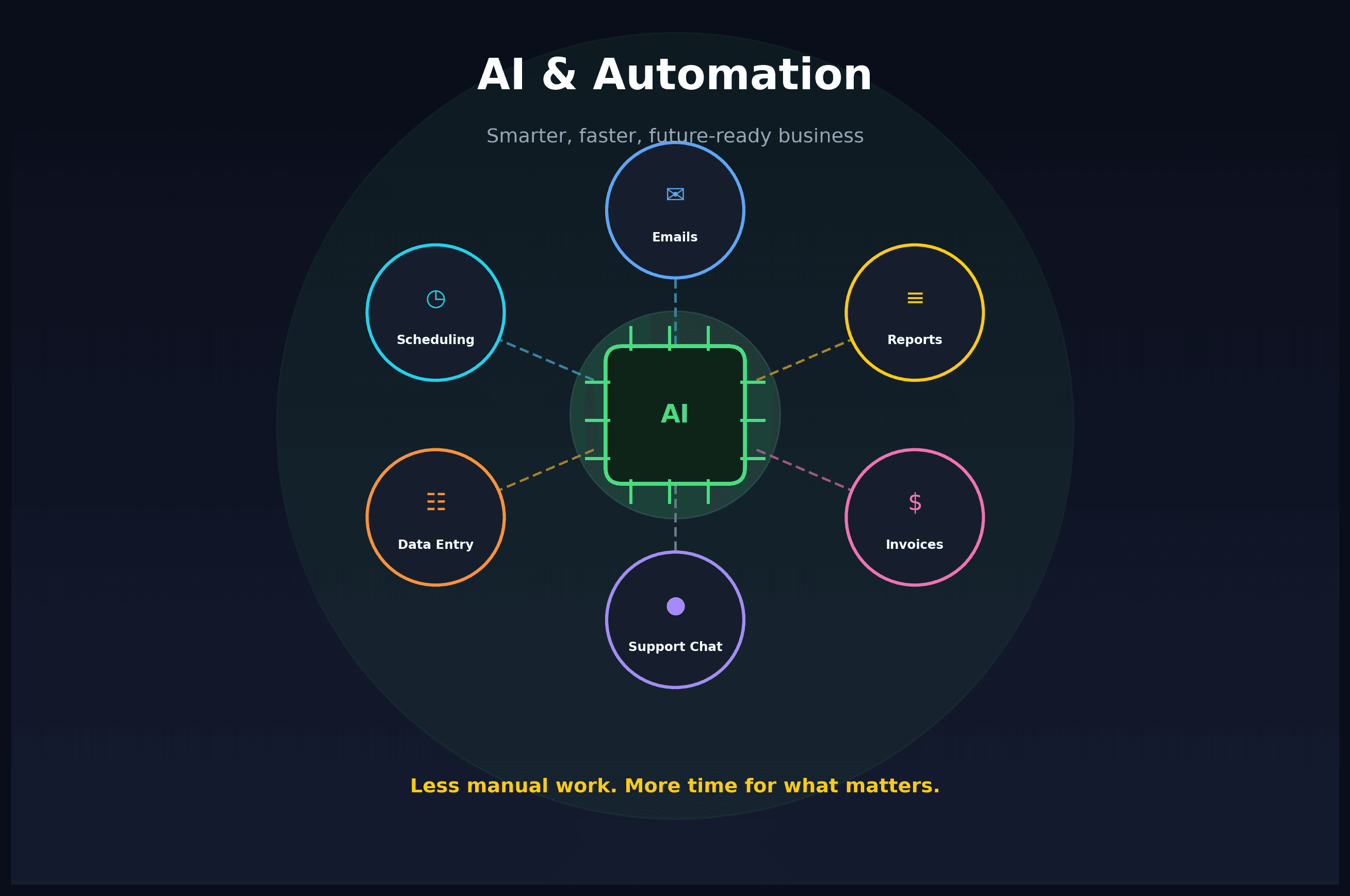
- Business process automation: Companies are increasingly using AI agents for tasks like customer support triage, data entry and validation, research summarization, and report generation, handling work that previously required a human to manually move information between systems.
- Reduced need for custom software for every task: Instead of building bespoke automation scripts for every specific business process, teams can increasingly describe a workflow in natural language and have an AI agent handle the coordination and execution.
- Human oversight remains important: Well-designed agent systems typically include checkpoints for human review, especially for high-stakes actions like sending money, deleting data, or communicating with customers, balancing autonomy with appropriate safety controls.
- New frameworks and protocols emerging: Standards like the Model Context Protocol (MCP) are emerging to help AI agents connect with tools and data sources in a more standardized way, making it easier to build reliable agent-based systems across different platforms.
- Still an evolving, imperfect technology: Despite rapid progress, AI agents can still make mistakes, misinterpret instructions, or get stuck on ambiguous tasks, meaning thoughtful design around error handling and human review remains essential rather than optional.
As these systems mature, the line between "asking AI a question" and "having AI actually complete work" continues to blur, changing what's possible to automate.
Conclusion
AI agents and autonomous workflows represent a meaningful shift from AI that simply answers questions to AI that can actually complete multi-step tasks by reasoning, using tools, and adapting along the way. From coding agents that can independently navigate and modify a codebase, to business workflows that chain together research, data processing, and reporting, this shift is changing what teams can automate without building custom software for every scenario. The technology is still evolving and imperfect, which means thoughtful human oversight remains important, but the direction is clear: AI is increasingly capable of doing the work, not just describing how to do it.